Julia Marchand American

Julia Marchand explores nature through the lens of museum dioramas and taxidermy. To Marchand, dioramas occupy a space intersecting science, anthropomorphism, drama, myth and imagination. She's interested in how those intersections inform the complicated relationship between humans and the natural world. Marchand's approach is intuitive resulting in narrative work that is both playfully whimsical and preternaturally mysterious.
-
 Arrangement, 2019
 -
Bear, 2019
-
Disappeared, 2019
-
Ghosted, Herd of Gembock, 2019
-
Horse, 2019
-
Lunch Time, 2019
-
Nuclear Stockings, 2019
-
Sea Horses, 2019
-
Here Kitty, 2018
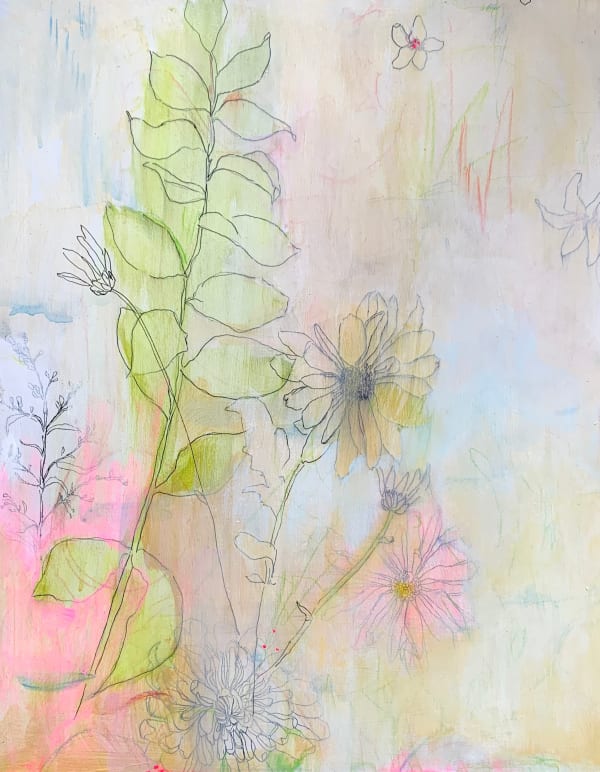

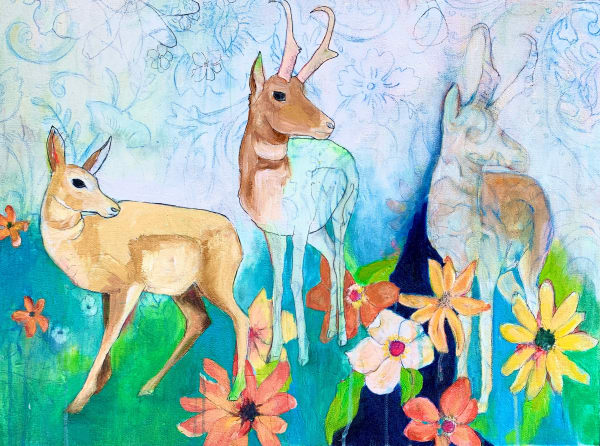
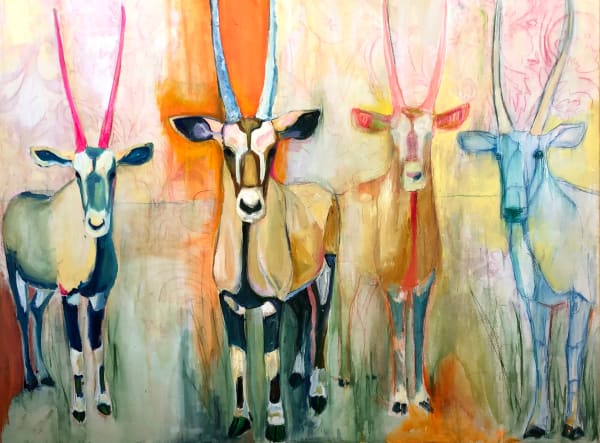

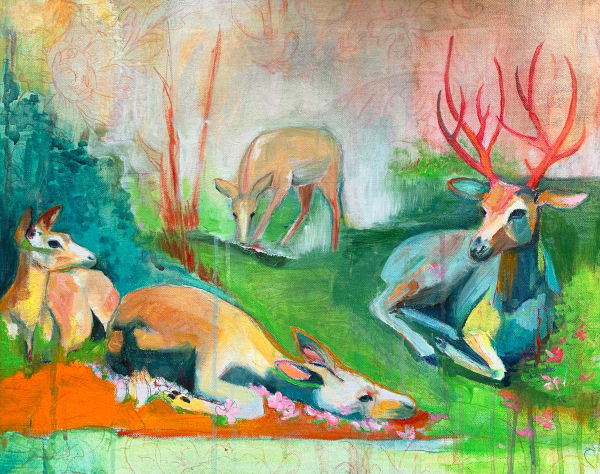
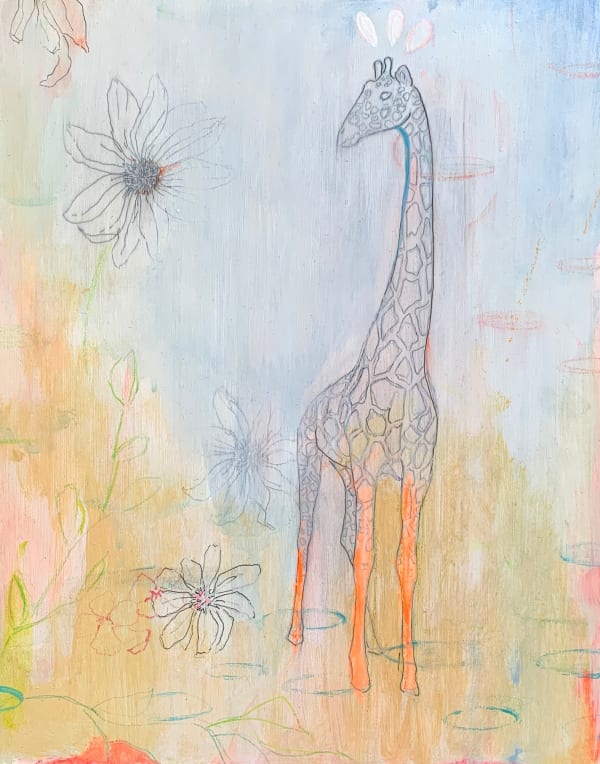
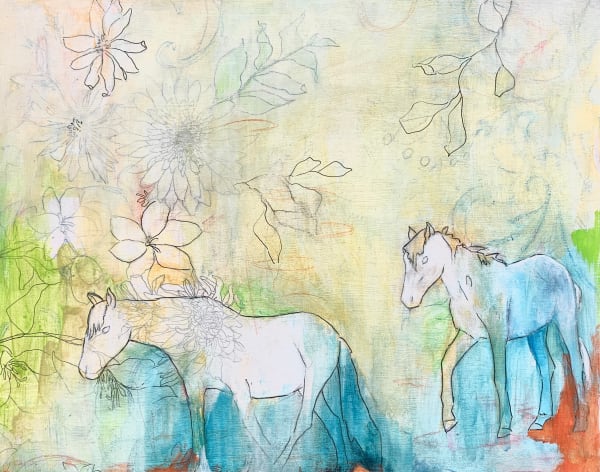


Northern California Bay Area-based artist Julia Marchand investigates the dark and complicated relationship between humanity and nature in her paintings and works on paper. The lure of her work is first the beauty of seemingly familiar, restful images—the child in the woods, the keening face of a primate, an attractive, patterned tiger—but the deeper pleasure for Marchand is in the uncanny sense that what we think of as the natural world is often a human psychological event. Her deep thinking about how we try to contain, rather than understand, nature—through taxidermied animals in “scientific” dioramas, in the way natural phenomena become sculptural, decorative objects to bring inside and make static—inspires the lush, layered world of each painting, wherein the humans seem animalistic and the animals are eyeless, stuffed, freeze-dried, or composed and arranged to look “wild” and “real.”
By re-imagining the dead, mechanized way nature is often portrayed, Marchand’s work challenges us to reconcile the frightening and wondrous spaces at the shadowy heart of nature and ourselves.
